On Friday, 6 February 2026, we had the privilege of welcoming the new cohort of first year law students starting at the University of Technology (UTS), as part of O-Week.
Side-by-side with other members of our team at the National Justice Project, we welcomed first year students and answered the many questions from people eager to start their studies and career journey.
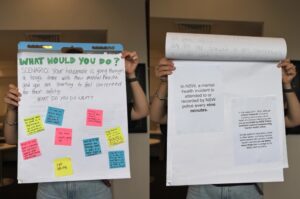
We talked about the impacts of policing and the campaign for alternative first responders. In these conversations we asked a question to students: what would you do?
Scenario: your housemate is going through a tough time with their mental health, and you are starting to feel concerned for their safety. What do you do next?
What we heard was simple. What we heard could also save lives.
LEADING WITH QUESTIONS AND CARE
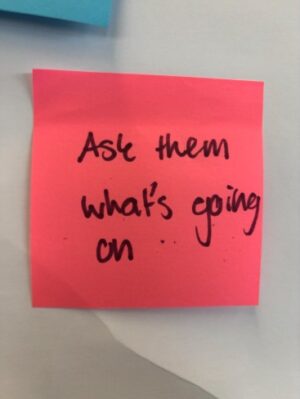
There was a clear theme that emerged from student’s answers. That the starting point is reaching out to people and asking – are you okay?
Not force, not violence, not weapons. Just approaching someone with curiosity for what they might need then and there.
The same can be applied to our first responders.
No force, no violence, no weapons. Approaching people with care and compassion.
These are not soft skills but critical ways or working and supporting people in distress.
Leading with these questions opens the possibility of seeing what the next right response could be, what kind of support is needed in that moment. These initial responses from young people emphasise the importance of humanity in the first response, in offering care to people who need support . ,
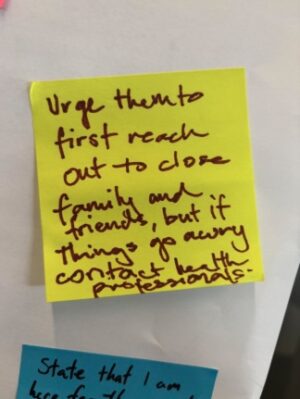
Students also raised approaching family or close friends. When people have community supports around them, this is often where people go for help. We need to strengthen these safety nets and recognise the work they do in keeping each other safe and supported. Peer support and family connections are contact points of knowledge and understanding, they can inform and de-escalate situations from a place of safety.
SERVICES
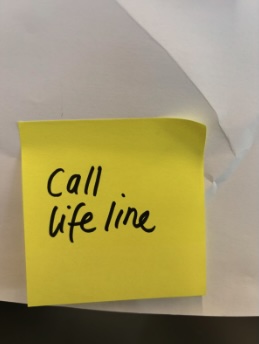
Additionally, students identified services that came to mind when in situations of mental health distress. Services mentioned included Lifeline Australia, health professionals and ambulance services. People shared that they would encourage others to reach out to those supports. The conversation continued amongst students when we posed the question, what if this scenario occurred after 5pm? They noted support options would be limited, even though it seemed the most likely time for heightened situations of mental health distress to occur.
WHAT WE DIDN’T HEAR
Resoundingly no one felt the right response was police. Students we’re surprised to then discover that currently every 9 minutes NSW police are responding to a mental health call out. It is clear we have a mismatch between what people think, what people need and what is happening on the ground with police-led responses to mental health distress. This is where sharing facts is critical.
What people believe is the right response and what people truly need in situations of mental health distress does not equate to investment in law enforcement and policing. How we care for each other in moments of mental health distress are reflected in the work of existing alternative first responders who understand and employ the principle of care, not force. It’s common sense, yet we are still waiting to see policy that recognises and invests in, first responses that centre peer support, dignity, care and choice.
With the simplicity of ‘reach out and ask’ we call on governments to fund responses that do just that. Invest in alternative first responders.
We thank each and every student that spoke with us and bravely shared how they would respond and leading with care. If you would like to continue this conversation within your community, visit our online library for tips and resources for meaningful conversations about alternative first responders.
To learn more about alternative first responders read the campaign position paper here. To pledge your support to invest in care, not force, sign here.